
Captive Breeding Success for the Saving Littlejohn’s Tree Frog Project

Author: Kaya Klop-Toker
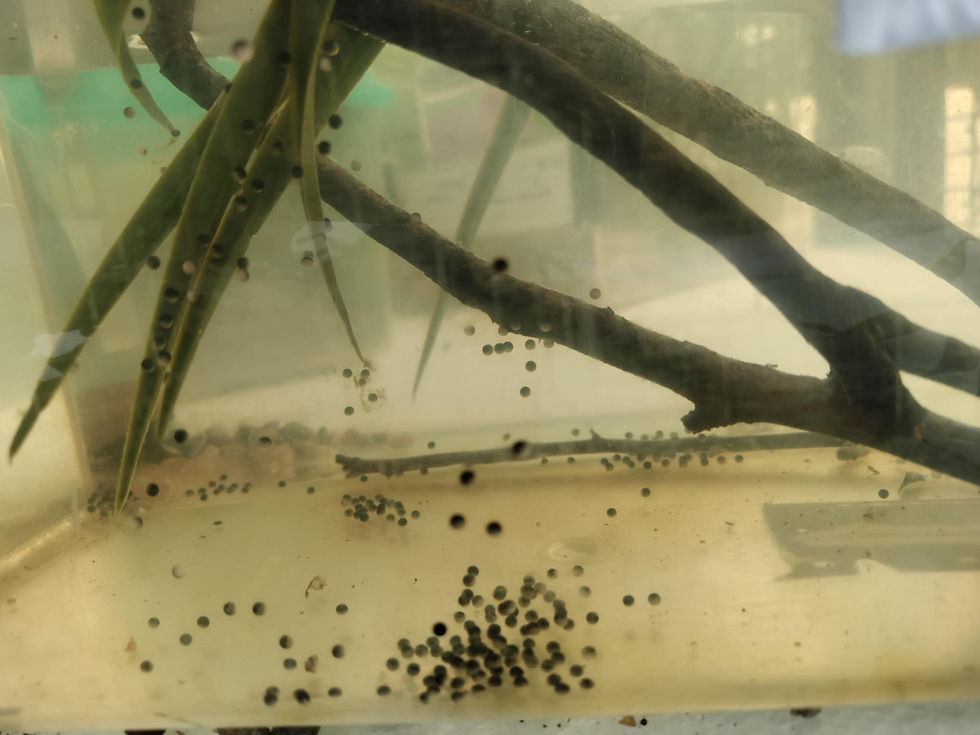
Recent rains and cold winter temperatures were the likely catalyst for successful breeding in the Centre for Conservation Science’s Littlejohn’s tree frog captive colony last week. The colony, which has been housed at UoN since 2022, were moved to outdoor tanks for the first time this winter. Shortly after, two pairs of endangered Littlejohn’s tree frogs produced large, healthy-looking clutches of successfully fertilised eggs. This is the first time that the colony has breed since 2022, and only the second time this species has ever been bred in captivity.
This captive breeding colony not only aims to produce animals to be released into the wild but also seeks to restore genetic diversity to inbreed wild populations. Furthermore, systematically pairing frogs from different populations for breeding, will allow the research team to test which crosses produce the healthiest offspring.
As inbreeding can have negative health impacts and lead to poor reproductive fitness, restoring genetic diversity through a process called “genetic rescue” is a critical step in improving the health and stability of wild populations.
There is still a lot of work to be done, but for now, the team is excited to introduce dozens of new eggs and tiny tadpoles to the world!



Comments